The game that wakes up your whole brain.
Three rules. One tongue. A free game that rewires how your brain and body talk to each other. It may look silly. It might save your life.
Take the Balance TestFree. No login. No email. No catch.
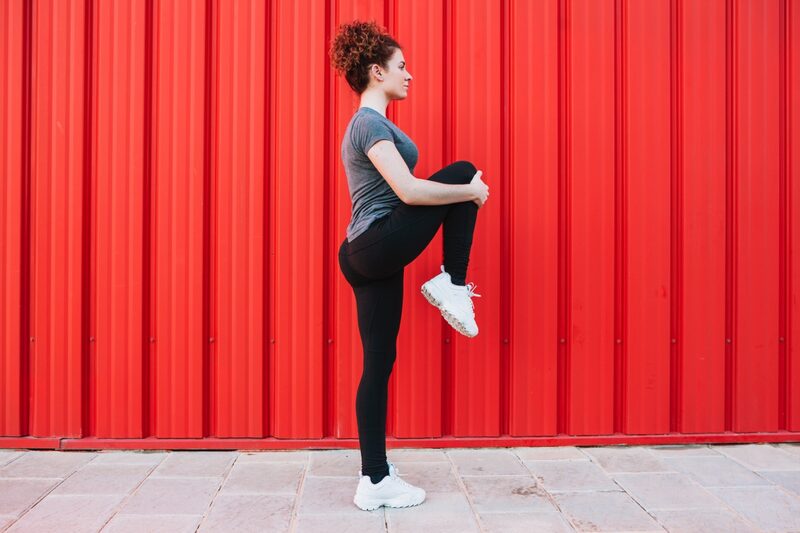
Three rules. One tongue. A free game that rewires how your brain and body talk to each other. It may look silly. It might save your life.
Take the Balance TestFree. No login. No email. No catch.
A 2022 study published in the British Journal of Sports Medicine followed over 1,700 people for 12 years. The finding was stark: if you can't hold a 10-second one-legged stance, your risk of dying from any cause nearly doubles. Age, weight, prior conditions. Didn't matter. Balance was the signal.
This has nothing to do with fitness. It's about how well your systems are talking to each other.
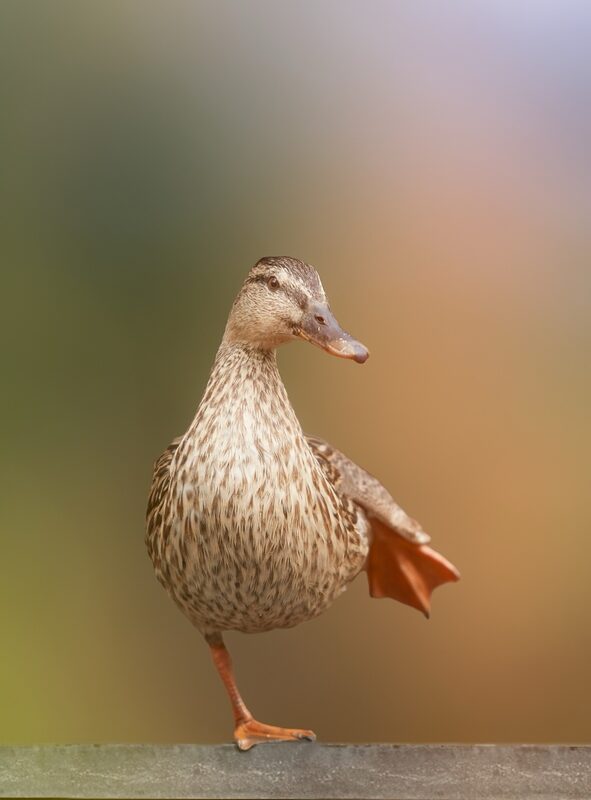
Even she knows the secret.
Balance is the canary in the coal mine. Not for one thing. For everything. Your brain, your inner ear, your proprioception, your core, your breath, your eyes, your feet. All of them coordinating in real time, hundreds of times per second. When that coordination starts to slip, everything downstream slips with it. Falls. Injuries. Foggy thinking. Lost confidence. Lost independence. But here's what nobody tells you: coordination is trainable at any age, at any level, starting right now.
Takes 60 seconds. Changes everything.
Stand on one leg. Lift the other foot behind your calf. Hold 10 seconds. Try 3 times per side.
Notice: did your tongue move? Did you hold your breath? Did your head tilt?
Pass or fail, you just learned something about your coordination. Now let's improve it.
Were your legs different? Most people are shocked to find one side is dramatically more stable than the other. That asymmetry is information. It tells you where your coordination has gaps.
Did you hold your breath? When balance is threatened, the body locks the diaphragm to create core stability. That's a survival pattern. Learning to breathe while balancing is one of the most powerful resets you can give your nervous system.
What did your tongue do? Press against the roof of your mouth? Shift to one side? Stick out slightly? Your tongue is coordinating the whole response. It's wired to the same cranial nerves that run your balance, your breath, and your core. You just felt it working.
Did your toes grip the floor? The sole of your foot has over 200,000 nerve endings. When balance is challenged, those receptors fire in patterns you've never consciously felt. That sensation is your proprioceptive system waking up.
Want to record your results?
At the end of 7 Days of Play, you'll have a simple coordination profile: left vs right, with task vs without, eyes open vs closed. No app required. Just your own numbers.
Want to go deeper than barefoot?
The Pivot gives you 3.5 inches of rotational instability under one foot. It is the tool the 7 Days program was designed around. One foot on. Your tongue moves. Your breath changes. Your brain wakes up.
$29 for Pro training. The Pivot is free. Shipping is free.
Everything below is the free barefoot version. The Pro version uses all four Pivot modes, deeper stacking, and the science underneath.
$29 · Free Pivot · Free Shipping →This program takes seven days. Each day builds on the one before. But it's not a ladder. It's a spiral.
By Day 7, you'll return to Day 1 and everything will feel different. Not because the exercises changed. Because you did.
No login. No email required. No catch. No excuses.
Three principles run through every day. Balance: put yourself in a position where your body has to solve a coordination problem it can't delegate. Stack: add a second task while balancing. Your brain has to reorganize. That reorganization is the whole point. Feat: set a goal you can't quite hit yet. The pursuit activates seeking circuitry that structured exercise almost never touches. That's why play works and repetition doesn't.
Each day has three layers. The Practice tells you what to do. The Notice tells you what to pay attention to. That's where the learning lives. The Science tells you why it matters. Skip it if you want. Your body doesn't need to read it to benefit.
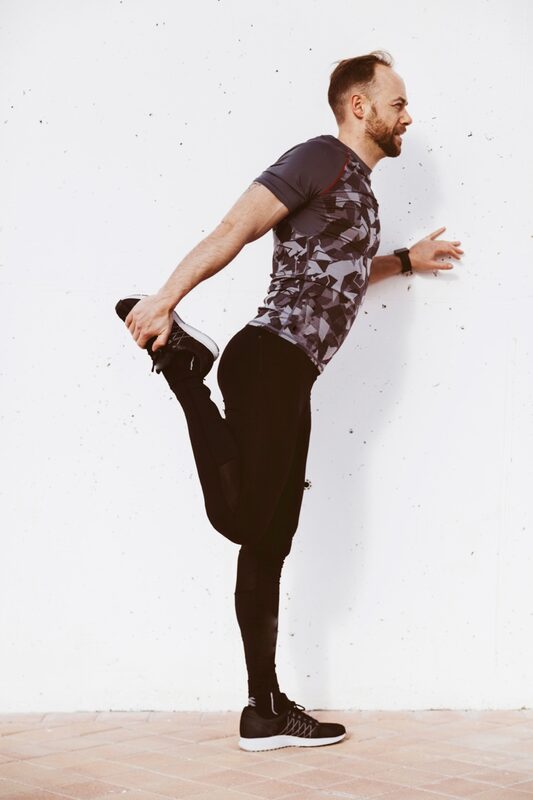
Start mild. Grow wild.
This is the free barefoot version. The Pro version ($29) ships a free Pivot to your door and teaches all four modes.
Stand on one leg. Either leg. Lift the other foot behind your calf so your knee points down. Arms wherever they want to go. Hold for ten seconds. Switch. Do three rounds per side.
That's it. That's the whole day.
If ten seconds is easy, go to twenty. If twenty is easy, go to thirty. If thirty is easy, read Day 4 early and close your eyes.
Your feet. Feel what the sole of your standing foot is doing. The pressure isn't even. It shifts constantly. Forward, back, left, right. Those micro-shifts happen hundreds of times per second. Where does the pressure live? Ball of the foot? Heel? Outer edge? Does it migrate?
Your breath. Did you hold it? Most people do. The moment balance is threatened, the diaphragm locks. That's a survival pattern. Your body creates a rigid column of air pressure to stabilize the torso. It works. But it costs you. For now, just notice. Did you hold? When?
Your tongue. This one will surprise you. Where did your tongue go when you started to wobble? Did it press against the roof of your mouth? Shift to one side? Push against your teeth? Your tongue is coordinating the balance response. It's wired to the same cranial nerves that run your vestibular system, your breath, and your core. You just felt it working. Possibly for the first time in your life.
Your legs. Were they the same? For most people, the answer is a shock. One side is dramatically more stable. That asymmetry is not a problem to fix. It's information to receive.
Your eyes. Did they lock onto a fixed point? Dart? Look at the floor? How your eyes behave tells you how much your balance depends on vision versus the deeper systems that work in the dark.
The 2022 BJSM study that tracked 1,702 adults found that the inability to hold a 10-second one-legged stance was associated with an 84% higher risk of all-cause mortality over 7 years. Balance is not a fitness metric. It is a systems-level biomarker for how well your brain and body are coordinating.
Left foot, eyes open, no task: ___ seconds
Right foot, eyes open, no task: ___ seconds
Difference between sides: ___ seconds
Walk heel-to-toe in a straight line. Like a field sobriety test. Find a crack in the sidewalk, a line on the floor. Twenty steps forward. Turn around. Twenty steps back.
Now the stack. Say "heel" out loud every time your heel hits. Say "toe" every time your toe lands. Match the word to the step. Precisely.
Then do it backwards. Then replace the words with a hum. Feel how different it is from speaking.
The coordination demand. You just asked your brain to do two things simultaneously: navigate a narrow path and name what's happening in real time. You may have stumbled. You may have stopped speaking mid-word to concentrate on your feet. Every one of those moments is a data point. Your brain encountered a task it couldn't run on autopilot.
Speaking versus humming. Speaking requires left-hemisphere language processing. Humming does not. Most people find humming easier to maintain while walking. That difference tells you something about how your brain allocates resources between verbal and motor tasks. If speaking destroyed your walking and humming didn't, your verbal-motor integration is a growth edge.
The backwards walk. How much harder was it in reverse? Walking backward deprives you of visual anticipation. Your brain has to rely on proprioception, spatial memory, and trust. It activates cerebellar pathways that forward walking barely touches.
Your tongue during walking. When you said "heel," where did your tongue go? When you hummed, did it press somewhere different? The tongue is shaping every sound you make while simultaneously coordinating with your gait. That coordination is so automatic you've never noticed it. Now you will.
Dual-task walking paradigms are used clinically to assess fall risk. The amount of gait change under cognitive load, called dual-task cost, is one of the strongest predictors of future falls. Training under dual-task conditions reduces this vulnerability. A 2019 meta-analysis found that dual-task balance training improved both gait speed and executive function independently. Both got better. Because the brain has one coordination architecture that serves both.
Steps without stumbling (forward): ___
Steps without stumbling (backward): ___
Could you maintain speech without pausing? Yes / No
Was humming easier or harder than speaking? ___
Stand on one leg. Now add a task. Pick one and hold for as long as you can. Do both feet. Three rounds per side.
Counting: Count backward from 100 by sevens. Out loud. Naming: Name an animal for every letter of the alphabet. Rhythm: Clap a steady beat, one per second. Catch: Have someone toss you a ball while you stand on one leg. Conversation: Call someone on the phone. Have a real conversation. On one leg. Don't tell them. See if they notice.
The degradation. How much did your balance change when you added the task? This is the most important number in this program. Your baseline minus your balance-with-task time equals your coordination reserve. A large drop means your brain is near capacity. A small drop means you have reserve. Both are valuable. Neither is a judgment.
Which tasks hit hardest. Not all stacks are equal. Counting is computational. Naming is verbal. Clapping is rhythmic. Catching is reactive. Conversation is social. Each one taxes a different network. The pattern of which ones collapse your balance is your coordination fingerprint. Unique to you.
The moment of failure. When you lost balance, what happened just before? Did the math stall? Did you stop speaking? Did your eyes unfocus? Did your tongue clamp? The moment before failure is the most information-dense moment in the whole exercise. That's where your brain ran out of bandwidth. That's the edge. The edge is where the growth happens.
Cognitive-motor interference research shows that dual-task training improves both components independently, a phenomenon called dual-task training transfer. The bottleneck isn't in either system. It's in the integration layer between them. Training that layer upgrades everything above it. This is why coordination training improves measures that seem unrelated to balance: reaction time, multitasking, emotional regulation, and cognitive resilience under stress.
Left foot, no task: ___ seconds
Right foot, no task: ___ seconds
Left foot + counting by 7s: ___ seconds
Right foot + counting by 7s: ___ seconds
Your coordination reserve: Baseline minus task time, divided by baseline. A drop of 20% or less suggests strong reserve. A drop of 40%+ means the systems are near capacity. Both numbers will change.
Stand on one leg. Near a wall. Close your eyes.
Hold as long as you can. Open when you need to. Try again. Three rounds per side.
Then try it with a hum. Eyes closed, one leg, humming a steady tone. Then try it in silence. Eyes closed, one leg, no sound, just breath.
The difficulty spike. It will shock you. Your eyes do about 70% of the work of keeping you upright. When you remove them, your brain falls back on systems most people haven't trained since childhood: vestibular (inner ear gravity sensors) and proprioception (joint position sensors). They respond fast. Within days, you'll feel real change.
The panic moment. There's a moment, usually within the first two seconds, where the body wants to open your eyes. It's not a decision. It's a reflex. Your brain registers the loss of visual input as a threat and fires an override. That override is trainable. Each time you hold past it, you're expanding your capacity to tolerate uncertainty. Not just physical uncertainty. All uncertainty. The neural pathways are the same.
Humming versus silence. Many people find that humming while eyes-closed actually improves balance. Counterintuitive. You're adding a task, which should degrade performance. But humming activates the vagus nerve through exhaled phonation, calming the autonomic system, and provides acoustic self-feedback through bone conduction, giving the brain an additional spatial reference. Humming in the dark is your body giving itself a sonar ping. If humming helped, that's a significant finding about your nervous system's relationship to sound.
Research on sensory reweighting shows that the brain dynamically adjusts contributions from visual, vestibular, and proprioceptive inputs based on reliability. Training with eyes closed forces upregulation of vestibular and somatosensory processing, building redundancy. Multiple reliable channels instead of one dominant channel. This is critical for real-world fall prevention, where visual conditions are often poor.
Left foot, eyes open (from Day 1): ___ sec
Left foot, eyes closed: ___ sec
Right foot, eyes open (from Day 1): ___ sec
Right foot, eyes closed: ___ sec
Your eyes-closed factor: Eyes-open time divided by eyes-closed time. A factor of 2x is normal for beginners. 5x or higher means your balance is almost entirely vision-dependent. This number drops fast with practice.
Stand on one leg. Slowly shift your weight forward onto the ball of your foot and your toes. Hold five seconds. Slowly shift backward onto your heel. Hold five seconds. Rock forward and back ten times. Switch legs.
Forward: Monkey Toes. Your toes grip. Your hands reach forward. Your anterior chain lights up. This is the primate grasping reflex. For millions of years, your ancestors survived by gripping branches. That wiring is still in you. Notice the quality: eagerness, reaching, willingness to engage. If you feel something like curiosity in this position, that's the neural architecture of approach behavior, activated through the feet.
Backward: Lizard Brain. There's a catch in your breath. A gasp. Your posterior chain stiffens. Arms lock or shoot out. This is the reptilian startle response. The body's oldest fear pattern. Notice the quality: bracing, pulling-back, vigilance. That's your sympathetic nervous system responding to a postural pattern coded as danger in neural tissue older than language.
The rock. As you shift between the two, something starts to happen. The gasp softens. The grip relaxes. You find a zone in the middle where neither the monkey nor the lizard is fully in charge. That's the integration point.
Your tongue. This is where it gets extraordinary. When you roll onto your toes, your tongue presses forward against your palate. When you roll onto your heels, your tongue retracts. Two tongue positions for two neural organizations. You are feeling, through your tongue, the difference between approach and avoidance. In real time. Through a muscle in your mouth.
The startle reflex is mediated by the reticulospinal tract, one of the most phylogenetically ancient motor pathways. Research on fear conditioning shows that repeated, controlled exposure in a safe context rewires the amygdala-prefrontal circuit. The body learns to feel the threat signal and respond with coordination instead of panic. This is what athletes call composure. What therapists call distress tolerance. The pathway is trainable. Through the feet.
Forward lean hold, left foot: ___ sec
Forward lean hold, right foot: ___ sec
Backward lean hold, left foot: ___ sec
Backward lean hold, right foot: ___ sec
Which direction was harder? Forward / Back
Did your tongue change position? Yes / No
Pick something you can't do yet. Something at the edge. Not impossible. Not guaranteed. Something that requires reaching past today's capacity by a small margin. Attempt it five times. Record your best.
Ideas: 60 seconds on one leg. Eyes closed for 20. A slow 360 turn. Catching a ball while balanced. Counting backward from 200 by 13s on one leg. Walking backward heel-to-toe with eyes closed. Reciting your phone number backward in tree pose.
The seeking circuit. When you set a feat and pursue it, dopamine releases. Not at success. During the pursuit. The seeking circuit activates during goal-directed exploration with uncertain outcome. It's the neurochemistry of hunting. Of play. Structured exercise almost never activates it because the outcome is known. Play almost always does.
The relationship with failure. You will fail most attempts. That's the design. If you succeed first try, the feat was too easy. Each failed attempt tells the brain exactly where the edge is, and the brain adjusts. Try, fail, adjust. The adjustment happens below consciousness. You just have to keep playing.
The moment you nail it. Pay attention to what happens in your body. A rush, but also a settling. A satisfaction that comes from your body knowing it expanded. It reached past yesterday's limit and the limit moved. That felt sense of expansion is neuroplasticity made conscious.
The challenge point framework demonstrates that optimal learning occurs when task difficulty closely matches skill level. The feat structure naturally self-regulates to this zone because you choose your own challenge. This self-calibrating property is why play-based training often outperforms structured programs. The learner is simultaneously the subject and the designer of their own optimal difficulty.
My feat: ___
Best attempt today: ___
Achieved? Yes / Not yet
How did it feel to pursue it? (one word) ___
Today, do everything from the week again. Stand on one leg. Walk heel-to-toe. Stack a task. Close your eyes. Rock forward and back. Set a feat. But this time, pay attention to your tongue.
Start here: Place your tongue gently on the roof of your mouth, just behind your front teeth. Not hard. Not forced. Just there. Breathe through your nose. Hold ten seconds. Notice if your posture changes. Notice if your breath deepens. Notice if your shoulders drop.
Now stand on one leg with your tongue in that position. Compare it to standing with your tongue slack. Feel the difference.
The tongue is not a passenger. Everything you've done this week, your tongue has been coordinating. You just didn't know to look. Now you do. And once you see it, you can't unsee it.
Tongue posture changes balance. When your tongue presses gently against the roof of your mouth, your airway opens, your cervical spine aligns, your vagus nerve receives a gentle mechanical stimulus, and your deep front fascial line engages. Your balance improves. Not because you're trying harder. Because the system is more integrated.
Tongue asymmetry. If your tongue shifted to one side during balance challenges, that's information. Tongue lateralization during balance demand may reflect hemispheric asymmetry in how your brain processes spatial information. This is frontier territory. Nobody has measured it systematically yet.
The five cranial nerves. Your tongue is innervated by the hypoglossal, trigeminal, facial, glossopharyngeal, and vagus nerves. These same nerves control vestibular processing, breath rhythm, core stabilization, and autonomic state. The tongue is the nexus.
The tongue-core-vestibular axis is increasingly recognized in rehabilitation science. Tongue-to-palate contact has been shown to reduce postural instability in both healthy adults and neurological populations. A device called the BrainPort, developed at the University of Wisconsin, uses electrical stimulation of the tongue to rehabilitate balance in patients with vestibular disorders. It works because the tongue is so densely innervated and so connected to the brainstem that stimulating it can substitute for damaged vestibular input.
Left foot, eyes open (Day 1: ___): ___ sec
Right foot, eyes open (Day 1: ___): ___ sec
Left foot + counting (Day 3: ___): ___ sec
Right foot + counting (Day 3: ___): ___ sec
Left foot, eyes closed (Day 4: ___): ___ sec
Right foot, eyes closed (Day 4: ___): ___ sec
Did you laugh at any point this week? ___
Did your tongue move when you weren't expecting it to? ___
You've been training for seven days on your own two feet. Imagine doing this on a course. With obstacles. With other people. With padded swords. That's the World of Lava.
After 7 Days of Play, you have data. Real data. About your body. From your body. Here's how to read it.
Left foot time minus right foot time. The bigger the gap, the more your systems have disconnected between sides. This number should shrink over weeks.
Your balance time without a task minus your balance time with counting. That drop is how much bandwidth your brain spends on the second task. Smaller drop means more reserve.
How much harder is it with eyes closed? That ratio tells you how dependent your balance is on vision versus vestibular and proprioceptive systems.
Did you laugh the first time you tried this? How quickly? How fully? Laughter on a balance challenge is a sign your nervous system shifted into discovery mode. It matters more than you think.
Track these four numbers over time. That's your coordination profile. No app. No device. Just you and your own data.
The free program teaches you the principles. The Pro training puts a Pivot under your foot and teaches you all four modes, deeper stacking sequences, and the science most people never discover on their own. Your Pivot ships free.
$29 total.
Pro training starts immediately. Free OG Pivot. Free shipping.
Get the Pro Training + Free Pivot →A modular coordination play system built on the oldest game in the world: the floor is lava. Four game modes. Puzzle, arena, combat, freestyle. Rollers, platforms, staves that double as musical instruments. Configurable arenas on interlocking tiles. Solo or social. Gentle or intense. The same nervous system principles you discovered this week, scaled to a whole room.
The floor is lava. The science underneath it is 25 years deep. Nobody needs to know that to play.
Enter the World of Lava →
I've spent 25 years studying how the human body coordinates itself. Not in a lab. In practice. Working with thousands of people across age, ability, and background, discovering what happens when you give the nervous system the right challenge at the right time.
Games of Coordination! started because I kept watching the same thing happen. Someone would stand on one leg. Their tongue would move. Their breath would catch. Their eyes would widen. And in that moment, they'd feel something they'd never felt before: their own coordination system, running in real time, solving problems they never knew they were solving.
I built this program to be free because the information is too important to gate. Coordination is trainable at any age. Balance is the most underused biomarker on the planet. And the tongue is the most overlooked organ in human development. Once you feel these connections, they change how you move through the world. I want everyone to feel them. The Pivot ships free with the Pro training because the tool needs to be in your hands, not behind a paywall.
The tongue is the most overlooked organ in human development. It connects to your balance, your posture, your breath, your emotions, and your coordination in ways that almost nobody talks about.
Your tongue is wired to the same cranial nerves that control your vestibular system, your breath, and your core stabilization. When balance is threatened, the tongue activates to help coordinate the recovery.
The tongue sits at the intersection of more neural pathways than almost any other structure. It's a chemical sensor, a motor organ, a breath shaper, and a posture coordinator.
Rolling onto your toes activates primate grasping reflexes. Rolling onto your heels activates a fear-gasp response. Training both teaches your nervous system to move through fear instead of freezing in it.
The same physics that keeps you upright on one leg is the physics that keeps your nervous system regulated under stress. Coordination isn't a skill. It's the substrate everything else runs on.
This program is the free entry point. The Pivot ships free with Pro training. $29. Free shipping. The World of Lava is the game. And it all runs on the same nervous system science.